Showing posts with label nintendo. Show all posts

Monday, December 10, 2012

To speak for the "..."


This piece is my attempt to speak for the unspoken - the silent protagonist. The archetype has been in a rough patch for a while, with countless more to come, no doubt, but there's value in the character. Playing the archetype "straight" in today's climate would likely cause more people to roll their eyes but there is space for subversion.

Dragon Quest V is that sort of wilful experimentation that only comes from years of exploring the same subject matter. The Silent Protagonist is always the hero? Then let's tear them down and force them to watch a chatty NPC replace "their" duties instead. Dragon Quest IV showed shades of this deconstruction with its focus on telling the stories of your comrades before yours, but Chunsoft and Yuji Horii really laid the despair on thick in Dragon Quest V. It's a fantastic game that everyone should play if only to realise that Dragon Quest has been, and always will be, more than "the same old thing".

Friday, November 2, 2012

The cold science of Pokémon


Wow, haven't used this for a while....

Nightmare Mode is back everybody and I was the ickle firsty for the relaunch with this piece on the scientific side of Pokémon Red and Blue.

I still have so much to say about Pokémon, in particular the first generation. This piece was really a jumbled up version of my ongoing Pokémon Red Let's Play with some extra snippets which I'll further elaborate on when I get to them in my everlasting saga of updates.

Pokémon is more important than a series of minor updates. If you dig deep into the designs of these creatures, you'll find all sorts of surprises. I'm sure the story behind Cubone's helmet has been well and truly spoiled for you, but there's really obscure ones like the traditional Japanese story Of a Mirror and a Bell reflected in the design of Bronzor and Bronzong respectively, and the cross-cultural mythology of the giant turtle who holds the world on top of its back. It's wonderful stuff.

In other news, work on my zine (two of them now!) is trudging along. It turns out that one piece is proving far more difficult, and lengthy, to write than expected. I... really have no excuse for how long this is all taking. I am excited to show it all when it's done, though.

As always, the art is done by the lovely Jake Lawrence.

Sunday, August 19, 2012

Let games be as challenging as they need to be


In which Alois defends the value of easy games. Also Boku No Natsuyasumi.
I hate listening to/complaining about difficulty in games. It feels like such a non-issue. A triviality. The people that really get to me though are the ones that argue modern games aren’t any good because they’re easier to complete. What sort of metric is that? I welcome the idea that by making games easier, we’re letting more people experience the medium and even allowing people to finish titles, too.
Because name another medium where some people don’t even see the complete work? Yes, book and movies can be placed aside whenever someone wants to but they require no effort on the viewer to see/read the whole thing. They’re open to be discussed by anyone.
And games need that level of approachability. We don’t have enough people talking about games.

Colonialism under the guise of the dungeon crawl: Etrian Odyssey and the invasion


I talk about a lot of things that make Etrian Odyssey great in this piece but the best thing about the game, what makes it rise above and beyond even the oldest games in the genre, is how it uses the DS screen.
Because dungeon crawls can be awful to the perfectionist. You have to buy graph paper because you’re gonna be drawing a lot of maps, and normal white paper simply won’t cut it. Then you have to buy a bunch of pencils and various fine pens so you don’t smudge or ruin your map. Then you have to annotate it and make sure every event or treasure is marked correctly. It’s a blissful, addictive experience that’ll ruin even the most patient of people.
Etrian Oydssey dedicates the touch screen entirely to your map. It’s an empty grid at the beginning of your adventure but gradually transforms into a perfectly aligned map. It maintains the intoxicating lure of drawing your own map and gets rid of all the awful ink spills and blotches that can ruin everything. It’s wonderful.

Monday, July 16, 2012

The things that I write

So, I've been a little bit slack with updating this side of the internet. I have two blogs alongside my scheduled writing at Nightmare Mode and I invariably pay more attention to my Tumblr. Why do I do this? I'm not sure. I'd like to say it's because I have an established audience there but that "established audience" is honestly not the sort who would have the time/patience/effort to read the things I write.

I mean, it's Tumblr. It thrives on reblogs and funny images. I'm kind of out of my element there.
Art by Jake Lawrence. Always and forever.
Anyway, I've written two pieces recently that now rest at Nightmare Mode for the foreseeable future. The first was a little treatise on flying in video games and looked at what is my ideal form of flight. It's a little whimsical - as all my pieces often are - but I had a lot of fun with it.

The second piece is, well, I hesitate to call it controversial, but it's certainly the most confrontational piece I've written. I don't get angry or shout at anyone but I look a little deeper into what I want when I play games and respond to a piece by Richard Cobbett about guilt and choice. It's certainly a piece that has words and opinions in it!

And, finally, go pitch things to Nightmare Mode. They're lovely people and they want lovely writing. Write some lovely things, please.

Saturday, June 16, 2012

The Campfire: A nightmare in Hyrule


My new post at Nightmare Mode!

Yes, video games were always scary when I was a kid. The age of polygons introduced freakish characters with pointed ends where things should be round. The Nintendo 64 made things worse by applying a fuzzy sheen to everything so things were even harder to distinguish.

Sometimes I wonder why and how I'm still interested in the medium considering how much video games scared me as a child. They were out to get me.

Tuesday, June 5, 2012

Mega Man: An Outlaw in an Asimovian World


(New post up at Nightmare Mode!)

The original Mega Man is not a fun game.

It's got some really whacky, awkward level design sandwiched between all the really brilliant parts. It's a good game littered with minor design flaws that really hamper your enjoyment. Mega Man laid the foundation but it was Mega Man 2 that would go on to be everything the original game wasn't and demonstrate what a small group of people can do when they pour their heart and soul into development.

While I was playing Mega Man: Powered Up (the remake of Mega Man on the PSP), I was struck by how different it was to the original game. Yes, some levels were redesigned and you can now play as the Robot Masters in the remake, but it was the tonal differences that really stood out to me. Both Mega Man and the Robot Masters dribbled conversation at every moment. Mega Man was clearly the Hero and the Robot Masters were undoubtedly reprogrammed.

This was never seen in the original game.

Mega Man and the Robot Masters never said a word. With no verbal communication at all in the game, motives and intentions were remarkably difficult to discern. Nothing was clearly defined or explained. It was... unsettling.

And that's really where this piece comes from. The atmosphere of the original games on the NES were defined by technical limitations to an extent but it gave the series such an uncertain and unique tone.

Check out TimeCowboy's art on his Tumblr, friends! He did the title image for this article :)

Monday, March 12, 2012

Taking The World With You: Dragon Quest


Dragon Quest (Dragon Warrior, if you want to be precise) was a revolution upon release. Today, it garners the respect it deserves for laying the foundation for an entire genre, but that's generally where the appreciation ends. Modern games have refined Dragon Quest's core concepts to the point where its primitive presentation and gameplay are difficult to go back to. But what's been tossed aside alongside the genre's advancements and upheavals and do these morsels deserve better treatment? Far from decrying what's been lost, let's take a look at the more esoteric elements of Dragon Quest that have been gradually chipped away over the years.

Remember drawing maps for video game dungeons? I don't, because I was born far too late to hop on that gravy train, but Dragon Quest practically demands the practice. While the world is an alarmingly small one, Dragon Quest provides you with no map or navigational tools. Towns, cities, and landmarks are all defined by cardinal directions, and dungeons are terrifying gauntlets with no easy way to navigate them. Unlike the illuminated dungeons of The Legend of Zelda, the dungeons in Dragon Quest are pitch black, safe for the four blocks lit up around you. With a Torch in hand, those four lit up spaces become a 3x3 lighting box, allowing easier exploration of a dungeon's labyrinth design. Alas, the high encounter rate inside dungeons provides a more pressing issue to deal with than your limited vision, and dungeons are frequently tackled via multiple trips to and from the nearest Inn. Each trip gradually unlocks more of the dungeon as you travel down new routes but, unless you have a fantastic memory, you'll need to crack out pen and paper to start mapping your progress.

The process of note taking in games has been largely swept aside by modern game developers and replaced with automated maps or helpful signposting. Detractors argue that a game should contain every element of play nestled inside its code, and any external elements are irrelevant. This dismisses what we bring to games by simply playing them, and each stroke of line on a piece of paper designating a dead end represents a hard fought victory, a sinking realisation, or a satisfactory conclusion to our adventure. When people dismiss the simplistic interaction of Dragon Quest, they neglect the exploration and map drawing - exploring the world and familiarising yourself with your surroundings - as a fundamental part of your actions. The turn-based combat is fast and efficient; it's a distraction more than the centre piece of the experience.

No, what's important in Dragon Quest is the hard fought ground you cover each time you set out from the safety of a village. When you emerge from that last dungeon with a veritable tome of knowledge resting on your lap, there's an immense feeling of satisfaction. More than simply having your achievements frozen inside a cartridge, they've claimed an irrefutable permanency beyond an NES chip. A quest, indeed.
Dragon Warrior maps (1)

Saturday, February 25, 2012

Final Fantasy: Crystal Chronicles & Nostalgia


I mean, I get the sentiment. Playing Final Fantasy: Crystal Chronicles by yourself is, arguably, the "wrong" way to play the game. It's simple to pick up and play, the levelling system is obnoxiously centred around having more than one player with you, material hunting for equipment is awfully grindy, and boss fights are nightmarishly difficult. The odds are stacked against you; I get it. But, after finally playing (so many years of waiting) Crystal Chronicles with four players recently, I can't say that one experience is inherently better to the other. Different, sure, but the more abstract qualities of play and the experiential nature of these two modes make equally enjoyable - and equally valid - experiences.

More so than any other multiplayer game, Crystal Chronicles develops a remarkable sense of travel and community. This is conveyed primarily through the narrative conceit itself. You're not so much embarking on an epic quest from point A to point B, but travelling to three different levels per year before looping back to your village and starting all over again. You travel with an old-fashioned caravan across worn out roads and through lived-in spaces. A diary system tracks your progress upon notable discoveries with flavourful text written in a personal, first-person style. Beautiful music with long-forgotten instruments play all manner of medieval tunes that evoke timeless images of adventures long past. Square-Enix nail all the more romantic, intangible aspects of travel so perfectly, but manage to leave a few holes to let the player fill in with their imagination. It's the type of game where you can imagine you and your party members huddled around a crackling campfire at night, looking up at a starry night sky, and talking about all manner of things until the wee hours of the morning.

For this reason, single-player is frighteningly lonely and overwhelmingly terrifying. The responsibility of collecting enough myrhh to rejuvenate the crystal protecting your village weighs far more heavily on your mind. Levels feel longer and more arduous; teeming with wildlife far more aggressive and dangerous when they only focus on you. Tactics change from the wild, agressive attacking of a four man party to a more measured, coaxing of individuals to engage you one at the time. Bosses are hulking behemoths that are almost exclusively beaten down with hit and run tactics as you carefully count out the frames of your attack animation. Even level ups shifts focus from collecting the simple stat boosting artefacts to the more permanent health upgrades and spell skills, since far greater stat boosts can be found with armour and weapon upgrades.

But, more importantly, your journey through the world of Crystal Chronicles feels more important travelling by yourself. The beautiful art style can be absorbed at a more leisurely pace, and hard fought battles feel much more satisfying when you pull your caravan up to the nearest town over to barter and trade with the locals. The brief, random encounter cutscenes with other caravans as you travel from level to level feel warm and lighthearted but intensely transient. Nothing feels solid and reassuring. It shifts focus away from the familiar and the reliable and lets you consistently absorb wonderful new environments. The Legend of Zelda is consistently praised for its spirit of adventure, but its dedication to habitual, world-building has you routinely returning to some places over and over again during the course of adventure. While Crystal Chronicles drops you back at your village at the end of every game year, the narrative elements of your stable family at home and the gradual changes in earlier levels as the years pass by, give a greater sense of time passed by. Funnily enough, The Legend of Zelda: Skyward Sword achieves the same fluidity of time via Link's consistent returns to his home village of Skyloft, but apparently that game is too linear or something, I don't know. The internet - it hates a lot of things.

Multiplayer in Crystal Chronicles feels like a party. There's a greater sense of forward momentum as your party barrels through levels at breakneck speeds, there's camaraderie and competition, communication - the world suddenly feels like a happier place than before. Teamwork rears its [ugly?] head at every opportunity with spell stacking, careful party composition, and a communal aspect of material gathering. Team roles shift at a moments notice depending on the severity of battles. The rigid and careful planning of single-player is thrown out the window in favour of a more adaptive, flexible play style.

A lot of the more romantic aspects of the game are lost in the process. The soothing music is washed over by near constant chatter, the methodical and gently placed story telling feels out of place in an environment that now requires almost constant action and quick reflexes. In fact, you don't even want to watch it; you skip over it. There are monsters to kill and levels to be beaten - you don't have time to stop and breath for a little while. Unless that stopping means armour and weapon upgrading at the nearest town.

Eventually though, and by the very nature of social gatherings, you have to stop playing and move on with your lives. All the GBAs and Link Cables have to be packed up and taken away with their respective owners. Your multiplayer playthrough is frozen in time until a later date. Returning to your singleplayer file feels ever more lonely, and the textual cries of your friendly, chalice-carrying Moogle can't hope to match the anguished sighs of a party member who's forced into the same deed. Your multiplayer adventures feel like they happend an eternity ago; a long lost memory.

Which is ultimately what Crystal Chronicles is all about - memory. The game timestamps your achievements, small and large, with a diary entry that you can read at any time. The amount of memories you have at the very end of the game determines whether or not you can complete the game. This theme is supported beyond the mechanics of the game, too. The visual style, the intensely melodic music sculpted with ancient instruments, the dense in-game lore - every element of the game is efficiently crafted to engage with familiar, deep-seated tropes of fantasy and mythology. It's a living artefact. It goes beyond the simple nostalgia play and referentialism in the mainline Final Fantasy entries to create manufactured nostalgia. It's a remarkable achievement to make something feel old without actually being old.

What happens in video game narratives is just as important as what happens while we experience the story. The memories we create while playing games are so often fragmented from the games themselves. Final Fantasy: Crystal Chronicles remains one of the few to thematically tie the two together.

Friday, February 10, 2012

Rambles on Pokémon

I really liked the days when Pokémon was just a simple monster-pet battling game. One where you got to name your Rival 'buttface' and went on great adventures with your starter and couple of creatures of the wild that looked pretty cool. When your Pokémon related thoughts were pretty much "I have a penguin with a trident on its face, how fucking rad is that?".

Sometimes you'd meet up with a friend and share neat stories and show each other all the cool things you'd found. Heck, sometimes you'd even get to trade around some of those creatures to see new and exciting ones! And occasionally you'd fight and one of you would win because he had Mewtwo and you still hadn't even beaten the Elite 4.

I liked those days before I started analysing each monster's stats and moves and trying to think up optimal strategies. Then I saw that Hariyama could learn Belly Drum in Pokémon Black and White.

And I laughed like a madman.

Stealth in Zelda

Hello friends!

I wrote a big ol' thing about stealth in The Legend of Zelda series at www.sneakybastards.net . Click the link to give it a read. It's quite extensive!

I had a lot of fun writing this! For all the voices out there writing about video games, we have very few websites that encourage a very specific framework to analyse games. You might be surprised at the conclusions I draw from the almost universally reviled stealth section in Zelda games.

Nintendo Network Worries


With the announcement of the Nintendo Network, the internet celebrated. Finally, Nintendo were getting serious about online play and incorporating DLC, digital transactions of retail games, and even offering micro-transactions for developers if they were so inclined. But with such a step, Nintendo are now entering the murky waters of shady business practices. Despite Satoru Iwata's insistence the company will still value their customers, they are ultimately a business, and I can't help but get nervous with a service that allows Nintendo to easily go down the same path other publishers are embracing with their DLC. Cut content intentionally saved for DLC, unlock codes, DRM, broken game releases – these are the realities that face the industry today, and while we may cry out in complaint, there are too many of us that concede and buy into publishers shoddy treatment of costumers. We support this behaviour. Not only that, we actively disparage companies like Nintendo who refuse to “update” their development process to allow this sort of behaviour, a strange Stockholm Syndrome effect exclusive to the video game community. I understand that the internet is responsible for countless beneficial aspects for modern game design like encouraging a viable indie game development scene, online multiplayer (divorced from the Project $10 shenanigans), and even re-contextualising the high score as Achievements and Trophies respectively, but at the moment the bad elements outweigh the good ones. This needs to change.

Developing an appreciation for what Nintendo were doing this generation (and still are, to some degree) is a good place to start. Nintendo, in their dedication to “withered technology” over the brand new, shied away from the industry's decision to embrace an always connected gaming platform. While Xbox 360 and PS3 rushed towards the internet in reckless abandon, Nintendo were content to plod along behind them. With the prospect of an internet-enabled machine, patches and updates that were once confined to the PC became a possibility for consoles. Bugs could be fixed, online multiplayer could be continuously adjusted to accommodate unpredictable player behaviour, and even firmware updates could dramatically change the OS of the console. While Xbox 360 and PS3 games were typified by their now PC-like surroundings, the Wii was a bastion for the “old guard”. There were never any concerns when buying a Wii game that you would be getting an incomplete experience. Quality was a problem, but that's a worry for anyone familiar with the industry. What you were getting on the disc was the complete, definitive experience and it was playable as soon as you placed the disc in the machine. No “Day 1” patches and no downloading game data to a hard drive. While Nintendo Wii games typically have a firmware update on the disc now in an effort to stop the homebrew market, they still take a considerably shorter time to start playing than the rest of the gaming landscape. These efforts to instantly plunge you into the game with little hassle should be commended in an age of delayed starts.

The absence of DLC has also given Nintendo products a complete “feel”. You buy a Nintendo game knowing that, a year down the road, you won't be seeing an Anniversary Edition released with all the DLC bundled together. You're getting the definitive version right from the beginning – no exceptions – and that sort of thing is valuable to a customer. It's also valuable to preserving the history of the medium. With multiple different SKUs, nothing is definitive and it muddles what the core experience is. Who's to say that the golden Lancer in Gears of War 3 is more or less important than the vanilla Lancer? Or that the Dragon Age armour in Mass Effect 2 is more or less important than the standard armour? You might scoff and call this trivial but the inclusion of such “exclusive” items fundamentally change a player's mindset inside a game. You're not really inside of the world of Mass Effect when you're giggling over a item from another video game world. The reference breaks the fiction. It creates two differing emotional responses, and with neither version defined as the definitive experience by the developer, it lessens whatever they're trying to make us feel.

There can be a lot of good in DLC and online connectivity. Rockstar used DLC as an opportunity to make complete sequels to GTAIV that resembled the expansion packs of old on PC. Online demos are another great feature that ensures you know what you're getting into before you hand over your money. The dark designs of online connectivity far outweigh all the good that accompanies it, however. Nintendo are only just beginning to treat online play as a serious business aspect of game design and there are an awful lot of pitfalls along the way. What's stopping Nintendo from looking at other publishers DLC behaviour and supporting that? We actively encourage that business model. Ultimately, a business exists to make money and there's nothing wrong with that. Video games are a business. Nintendo's journey into the online world has the potential to treat customers with respect, we just have to support the correct behaviour.

Thursday, February 2, 2012

Obligation and Animal Crossing


Obligation is a funny thing.
I don’t feel obligated to do a lot of things in life. I don’t think it’s necessary to see your family or even like your family, especially if they’re awful to you. I don’t owe my old school friends a friendship debt that I must maintain long after high school. I don’t even feel obligated to go to work week after week - I do it because I want to. While it may sound heartless, it frees me from the things that people expect of me and lets me do what I want. People understand that I’m being genuine when I want to help them... hopefully.
Obligation does rear its ugly head in my writing though. Not only do I feel a biting need to write everyday, I’m wracked with guilt and disappointment in myself if I don’t. Realising last week that I wouldn’t be able to make my weekly update on my blog was a painful experience regardless of whether or not anyone would read it, or care. In that one week, I missed practice, I missed the opportunity to improve my writing, and I missed sticking to a schedule that promotes activity. Even if I had a compelling reason that I couldn’t make my weekly update (I was writing, funnily enough), I could of written faster, dawdled less, and made firmer decisions on what word fit best in a sentence.
For a while, video games were something that resembled an obligation in my life, too. Born from my childhood when I had to wring every last drop of entertainment out of a game before I could move on, when I had no money of my own and had to wait between releases, games were things that demanded to be finished completely, regardless of quality or enjoyment. Then I grew up. I realised I was no longer a child with infinite time and if a game wasn’t enjoyable there was no reason for me to finish it. Much like how my writing is an exception to my anti-obligation attitude, however, so too is there an exception with video games.
Animal Crossing compels me to be devoted to it. In its absurd simulation of living with animals, I find myself unable to break the daily routine of talking to friends, fishing, and bug collecting. With other games, the penalty of dropping out of the experience is non-existent, you’re simply conceding that when you do return, you’ll be significantly less skilled at the game than you were previously. Animal Crossing punishes such action with inquisitive villagers asking you where you’ve been, a house filled with cockroaches, weeds littering the village, and missed seasonal events. Simply forgetting a game where such things are tracked feels heartless. I’m abandoning a group of animals and a village that simply can’t maintain itself without my input. It’s not like I can shrug off their questions and invites like I can with the friends in my life. My friends have work, school, and other people in their life that occupy them outside of my presence. These animals have nothing outside of my input – their houses stay the same, their clothes stay the same, their chores remain unfinished. Despite the seasonal changes, the out of control weeds, and the bug infestation suggesting the passage of time, the villagers of Animal Crossing don’t go along for that ride. Some might up and move towns while you’re away but - god forbid - they won’t be able to change their shirt until you talk to them and give them a new one. Even the big events that bundle your villagers to play and have fun together come across as a sort of pack mentality than true individualism. These animals are children, and they need to be looked after.
So, my irrational obligation to care for these strange little creatures stems entirely from their inability to do anything constructive for themselves. I don’t want them to live in a village filled with weeds and insects. I don’t want them to stroll through an empty museum and cry at the lack of exhibits, and I certainly don’t want them to remain in the same shirt for years on end. I care about all of these little things right up until the point where I skip a day of play. My steely, compassionate resolve falters. That one missed day steamrolls into another, and another, until weeks and months have passed and I can no longer face the endless waves of weeds and cockroaches ahead of me. Once that moment has passed, I can no longer return to my village unless a hard reset accompanies me. I can’t look Poncho in the eye and tell him I missed him without feeling a profound sense of guilt. I didn’t try hard enough, I let the poor bear down. Should he appear again in my new town and fail to remember me, I consider it a fair trade. It’s my penance for selfish neglect.

Sunday, January 8, 2012

The Deep Blue and Video Games


When I was younger, I was terrified of the ocean. Going to the beach and watching the waves crash against my feet, feeling the tide pull against my calves as my toes sunk into the sand, and watching the little fish dart about in the water below both terrified and enthralled me. It wasn’t so much the fear of being attacked while in the ocean that got to me but rather that I was walking into someone else's home. I was an unexpected guest. Getting into the water was the tricky bit, the biting cold was another major hurdle for me, but the point where I struggled the most was when I could no longer see the ground beneath my feet. A sickening dread rose up in my chest as I realised that something, anything, could be directly below me and I could do nothing about it. I didn’t feel this way swimming in an enclosed space, like a swimming pool, but whenever murky, impenetrable water was involved, I grew anxious. Growing up in Australia only encouraged my fear of the deep blue as our local collection of marine life, despite the irregularity one could encounter them, are almost all dangerous. Don’t even get me started on dams. I was paralysed simply seeing the murky brown colouration of their water, and the tickling sensation on one’s feet when a yabby brushed underneath them might as well have been a Great White for all I cared.

As sappy, highly emotional beings, we’re reasonably inclined towards taking our fears and joys with us into our various hobbies and day to day activities, so it was only natural that my fears of the Deep Blue travelled with me into video games. For this reason, the earliest games of my childhood are remembered more so in how they presented water in a three dimensional space than anything else, as they were always the most vivid sections of the game for me. A reoccurring element reveals itself when I evaluated just why I found them unpleasant and that is the use of “The Big Drop”. Designers weren’t simply content with constructing a gentle slope that gradually dipped lower and lower as you swam across the water, like a beach. No, they seemed to revel in turning that gentle slope into a gaping ravine at the drop of the hat and previously shallow pools of water would transform into giant, 180 degrees, tumbling cliffside. Imagine a tall glass blown up to an unfathomable size, and then imagine being asked to swim to the very bottom of it, and then you’ll have an idea of what I found so uncomfortable. My first encounter with the murky depths in video games though had nothing to do with “The Big Drop”.


Clanker’s Cavern in Banjo-Kazooie was terrifying for a lot of reasons but chief among them was Clanker itself: a giant, mechanical shark tied down by lock and key in a pool of dirty water. Visually, Clanker has an awful lot of things going for it that can easily make someone feel queasy. It’s described in game as a living garbage compacter and its appearance initially fits that description. Draped in rusty metal sheets and creaking bolts, with big goggly eyes and metal teeth, Clanker is an imposing creature the very first moment you encounter it. Then you notice the mysterious open wounds on the sides of his body, a familiar red colour, and you’re not altogether sure if he’s entirely mechanical.


Once you’re inside of him (I couldn’t do this for weeks) your suspicions are all but confirmed. Clanker is, despite what it is stated otherwise, definitely organic and the presence of irradiated, mutated crabs sharing the shark’s living space leads to unwanted conclusions my childhood never wanted to think about. I thought sharks were big enough as is and the suggestion that Clanker could of mutated in the polluted water was enough to make me skip the level entirely until the very end.


“The Big Drop” first revealed its ugly self when I played Super Mario 64. Jolly Roger Bay is anything but jolly and that giant eel gave me nightmares as a child. Here, the quintessential level designer’s trick of teasing the player with shallow waters before plunging them into dizzying depths is in full force. The player can see the drop too, the sharp curve of the cliffside just before the shallows lead into the main body of water. And then, of course, the eel. The eel lies in wait at the very bottom of the course inside his little hidey-hole and needs to be coaxed out in order to get into the caverns behind him. The creature’s elongated body twists and writhes about in the water, circling above the sunken ship at the bottom of the lake, guarding something.


You can’t feel the slimy skin of the creature but its very presence and movement around the bottom of the lake adds an increased awareness of your surroundings. The eel is much better at moving through the water than the tiny plumber you’re controlling and it’s certainly big enough to swallow Mario whole. It was never capable of eating Mario, of course, but my imagination worked its best to ensure me it could. All the while you’re exploring The Bay, there’s a never ending series of bubbly, floaty chords playing in the background that manage to sound endlessly comforting and terrifying all at the same time. When it works, it reminds you of being in an aquarium watching schools of fish effortlessly swim above you through thick glass. When it doesn't work, you feel like you’re at the bottom of the ocean and your body is being crushed by the compression.


If Jolly Roger Bay was the introduction to “The Big Drop”, Dire Dire Docks is the concept at its logical, raging extreme. Whereas Jolly Roger Bay at least had the comfort of solid land to retreat to if your nerves betrayed you, Dire Dire Docks has no such thing. The tall glass level design returns but this time you’re dropped straight into the water at the beginning of the stage and the only way to get anywhere is to dive straight down. More sea creatures were tossed into the mix, a shark and an oversized sting ray, and a small whirlpool awaits you at the bottom. There’s a submarine somewhere too but I was a bit too concerned about the animals in the water and the tall, unclimbable walls to really notice. Here, we are inching towards my perfect panic attack in which there are not only horrible creatures in a pool of water around me but also no discernible way of getting out of the water, meaning that I would inevitably be stuck swimming around, hopelessly looking for a solution, until I was weak from exhaustion and then drown… and then a thing would eat me. Or I’d be sucked into the whirlpool.


But all of these are merely pleasantries on the path towards Super Mario 64’s truly horrifying underwater stage. The Secret Aquarium is a box shaped room filled with water and no way to get in or out of it. Windows line the sides of the walls and show a lovely blue sky, so even if Mario was capable of escaping this aquatic hell, he would simply meet an equally horrible death by fall. Out of the frying pan and into the fryer, as they say. Within this space, the little version of me struggled with facing the biggest fear of aquatic exploration: drowning. The plentiful coins around Mario easily cover your air supply needs but the physical sensation of actually controlling a figure in a boxed-in pool of water was difficult to handle. I shouldn’t even have to mention Mario’s horrifying drowning animation to hammer home the traumatising nature of The Secret Aquarium.


Outside of Mario and friends, The Legend of Zelda: Ocarina of Time also worked its hardest to convince me that the sea was a terrible place that no one should swim in. Lord Jabu-Jabu was a horrible challenge to overcome when I was younger and was borne from a very different fear buried deep inside my bones. This fear, let’s call it “The Gollum Effect”, first sprung into my mind during my teacher’s reading of The Hobbit in class. The specific line in the book, which escapes me now, created an image of a fish swimming up stream into hidden waterways and getting stuck there, growing larger and changing its shape as it aged. Playing OoT, I couldn’t help but notice there wasn’t anywhere Jabu-Jabu could have come from, no river or creek to swim up from, and that he was more than likely placed in this small pool of water a long time ago by the Zoras and had grown to an unnaturally large size. “The Big Drop” plays a minor role in this specific instance too as Jabu-Jabu is suspended in a very deep, small lake.


Establishing that I find everything around and about Jabu-Jabu creepy hopefully illustrates my emotional mindset when I first went inside the beast. I freaked out. For some reason, even after two dungeons of design reinforcement, I thought that Jabu-Jabu’s Belly operated differently to other dungeons. I couldn’t simply turn around and exit the area; Jabu-Jabu’s teeth were in the way and teeth bite down on things. Similarly the very first door into the dungeon, in my mind, couldn’t simply be opened with the press of the A button. In my panic, I attacked the pinkish doorway and cringed as blue blood burst forth from my assault and a loud wail echoed throughout the room, a painful cry. I was inside the mouth of a living, breathing whale and I hated every moment of it. My dad finished the dungeon for me.


A year later, The Legend of Zelda: Majora’s Mask tackled the widest held fear that grips our minds whenever we swim in the ocean, lake, or river - the unseen attacker lying in wait. Deep inside The Great Bay Temple lies Gyorg, the guardian of the dungeon, and one of the most difficult boss fights in the game. Link is placed on a small island surrounded by water as the great fish below swims and darts about, periodically leaping out of the water to snatch and bite at us, the unwanted guest. When you finally land a successful hit on the monster, it goes limp, stunned, and sinks to the bottom of the pool. Try as you might, the beast is just out of reach of Zora Link’s detachable boomerang fins and, if you don’t act quickly, it’ll soon awake and start its attack in earnest once more. You already know the solution in this situation, unfortunately. You’ve just been trying to avoid the inevitable by cycling through Link’s collection of various doodads. Nothing, try as you might, can replace the Zora’s ability to sink to the bottom of the water and karate chop Gyorg in the face. But then you’re not quick enough, the fish awakens, and suddenly you’re swimming away as fast as you can, desperately trying to leap out of the water back onto the safe island lest Gyorg eat you. Three hearts is an awfully large amount to pay for such a simple mistake.


The last, and most memorable, instance of facing my fears in video games was in Tomb Raider 2. After Lara does her usual adventuring through various ancient tombs and constructs, she’s plunged to the bottom of the sea to look for a mysterious sunken ship. Far below the surface there is very little light, despite what the speckled sun beams might suggest, and Lara’s immediate surroundings are drenched in darkness. A bread crumb trail of broken equipment on the seafloor catches your eye and you direct Lara towards it, ever aware of your dwindling oxygen bar as you swim along. Then, a shape materialises from the inky blackness. It’s a fucking shark and now you’re panicking. You keep swimming, keenly aware of the jagged teeth behind you and slip inside of a wrecked ship. The walls close in on you, the previously open space becomes narrow and claustrophobic, and the crashed ship is labyrinth-like in its destruction. The ever present worry of the shark behind you does nothing to still your nerves as you hurriedly navigate through the sunken maze. In this one tiny, focused moment, almost all of my fears about the ocean were captured and instilled - the murky deep water, the unknown attacker, and the sensation of being at the very bottom of the earth, with all the crushing compression that it implies.


Even if I felt that the video games I loved exploring were conspiring against my play time as a child, I can’t help but think that through playing them I learned to be not so terrified of the sea. Nowadays, I have an unhealthy obsession with the ocean including the unusual and fascinating creatures at the bottom of it. I actively seek out video games that have underwater sections in them and relish the opportunity to explore them. I enjoy the more limited controls of my protagonist and the keen sense of exploration and adventure that the sea abundantly provides. When people ask me what video games have ever helped me with in my personal life, I always mention that I wouldn’t be able to swim without them. In a country where warm weather is (usually) just around the bend and beaches are easily accessible, I can’t help but think that’s valuable.

Monday, July 18, 2011

On the Games of Yesteryear

I'm horrible at 2D platformers.

I place my inability to play them originating from jumping into the video game world during the Nintendo 64 era. The 2D plain was thrown out by the majority of developers world wide and blocky, polygonal 3D was the next big thing. Banjo Kazooie and Ocarina of Time were my mentors and I learned the joys of navigating through spaces that suddenly required depth perception. Jumps were a bit more forgiving, combat was more dynamic (and even let you avoid encounters should you so wish) and 3D space was much more conducive to slower, more methodical play. You can clamber on top of a hill and look out at a vast expanse of land, plan a route and move towards it whichever way you wished. You can take your time. 2D platformers have enemies moving towards you almost constantly; they're a reactionary game more than a preemptive one. There are benefits to both styles but the style that I grew up with severely limited my ability to enjoy the other one. To compound this further, I loved RPG's and their menu based systems. After years of these types of games, my reaction times were all but blunted. That's not to say I can't enjoy 2D platformers. It's more a matter of persevering through my overwhelming lack of ability. Then, and only then, can I ultimately enjoy them. That sounds hateful but my intention is otherwise.


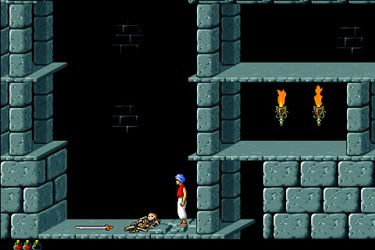
The very first video game I played was Prince of Persia; a remarkable 2D platformer by Jordan Mechner. I love that game but it comes from a different pedigree of game design in comparison to Mario. The plumber emphasises momentum and the exuberance of movement. The screen scrolls with Mario's leaps and bounds and encourages constant progression. Prince of Persia focuses more so on realistic animation; a standing jump propels the prince upwards and a running jump only reaches so far, regardless of how long you hold down the button. This changes the level design and general mentality of the player significantly. The pixel perfect jumps of the Prince lend themselves to precise environmental hazards unlike the wide open blocks of land featured in a typical Mario level. This design difference promotes a more methodical, cautious style of play; almost puzzle like. By treating the Prince's move set as the tools the player uses to solve the puzzles in the game, Mechner designed Prince of Persia as such to embrace it's more cerebral play style. A scrolling screen was replaced with a more traditional static image, allowing the player to stop and assess the various jumps, pits, enemies and general level design of each screen before deciding how they would best progress through it. It's a game that demands perfection and the challenge grew from executing the perfect run once you discovered the optimal way to complete each level. It was hard but it wasn't reflex intensive like Mario, Sonic and Eastern developed platformers in general. Even if the combat in Prince of Persia was the most reflex heavy part of the game, the detailed animation made it significantly easier to predict and counter the enemies attacks. Again, it was a game of observation over fast reflexes.


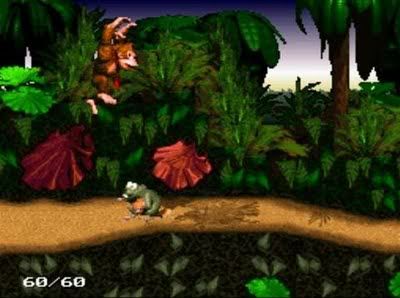
The Donkey Kong Country series is an example of infuriating platformer design (or at least the ones on the SNES were). It wasn't the controls, even if they were a little bit loose, and it wasn't even the strong focus on reflexes. No, the problem came about from the unusual raised camera perspective. In the effort to make their game look as 3D as possible, Rareware implemented a perspective that placed a horizon line on almost every surface, meaning that it was extremely difficult to determine exactly when to jump near the edge of a cliff. Suffice it to say, there were countless amounts I simply ran off the edge. Not content with one annoyance, Rareware also pushed the camera far to close to our simian friends, giving the player less than optimal time to prepare for the onslaught of shit that frequently ran towards you from the right side of the screen. Oh, Donkey and Diddy were also positioned alarmingly close to the middle of the screen which only further exacerbated the lack of preparation one had for the rampage of enemies. Mario, at the very least, always gave the player a considerable amount of time to recognize and react to the threat.


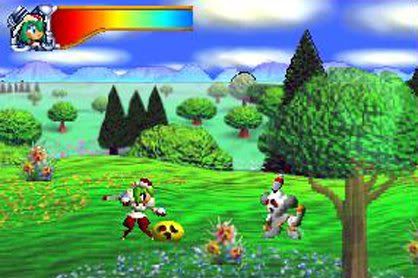
Or how about a game where there wasn't much of a threat at all in standard gameplay? Mischief Makers paired the diverse movement set of the Prince with the hurried, momentum based platforming of Mario to great effect. Here the player assumed the role of Marina, a green haired robot girl, as she sought to rescue her creator, Professor Theo. Being a robot, Marina is gifted with an array of interesting movement possibilities beyond the simple leap. She can dash across ground and sky with her boosters, slide across the dirt in a similar fashion to Mega Man and most enjoyable of all... pick up things and shake them! Rather than embrace the realistic movement of the Prince, Marina expands upon the momentum based platforming of Mario with a move set that emphasises speed. Once the player figures out Marina can leap after activating her slide boost to gain a significant burst in speed and sizable air time, environments become a playground for speed runs. There are little to no hazardous jumps in any of the levels and many of the stages act as short puzzle vignettes, encouraging the player to rush through the level with bold movements, exploiting every possible deviation of Marina's abilities. Mischief Makers thrives on the simple joy of controlling an extremely acrobatic character.


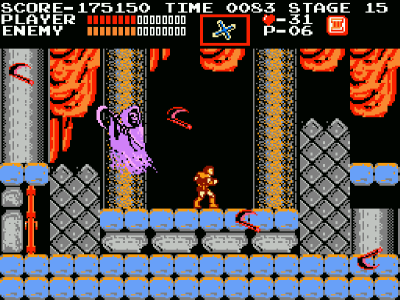
Castlevania, as a whole, is another interesting divergent of the platforming genre focusing on rhythm, momentum and timing. It's a combat heavy series that places huge importance on forward progression. Each enemy encounter has a specific attack routine that must be memorised and exploited to proceed. Many of the enemies you face take one or two hits to dispatch meaning that room and level design as a whole come together harmoniously in a very rhythmic, pattern based fashion that promotes flow; the player gets so absorbed in the activity that nothing else seems to matter. It's a much more designed experience than most games which is honestly surprising considering the breadth of gameplay elements included in the series.

Maybe I do like 2D platforming games after all. I prefer the ones with the more off-kilter gameplay design though. 2D platformers that only have a jump button are anathema to me. While I appreciate limiting the actions of the player controlled avatar can encourage intricate level design and more thoroughly exploit a single gameplay hook to it's fullest, I enjoy the chance to control a character with a full suite of abilities at their disposable. They feel more like a real person and less like a little blob of migs and megs.