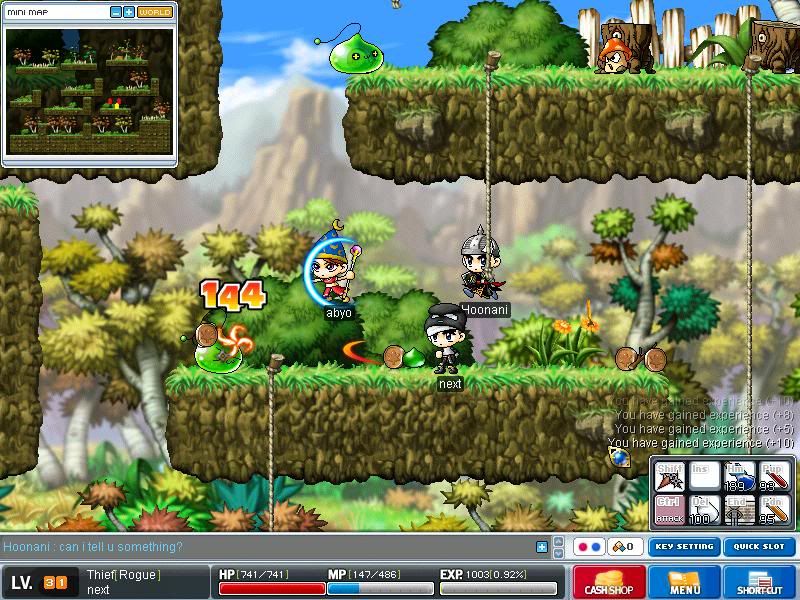
Let's make this abundantly clear: Maplestory is a horrible game. It's an extremely grind-heavy MMO with a focus on grind... and grind. The amount of grinding in this game is ungodly. It was my first introduction to MMO's and will most probably be my last until developers realise that an MMO doesn't have to be an MMORPG. That being said, by gosh, was it a pretty game! The lush 2D art, the adorable monster design, character art and incredible music all added up to a game that felt like a journey. The knowledge that every character you passed through the world as you murdered your next orange mushroom was another person, who might of been all the way on the other side of the world, was an entirely new experience for me. It was almost heartening to realise that everyone had to leap through the same level grinding hoops to get anywhere near Ellinia, or that you could always reliably encounter massive slowdown in Henesys' infamous monster spawn spot. Even Nexon's refusal to incorporate a fast travel option paid off in spades as crossing the sea involved boarding a boat filled with people chatting away about all sorts of things. Even if I didn't enjoy the actual gameplay, Maplestory had a wonderful community.
For many years it's been a community I've increasingly been meaning to re-visit. I had heard whispers of a recent patch that significantly altered the game so much as to almost make it unrecognisable, but I didn't want to jump back into Maplestory all that quickly. After all, I didn't really enjoy the game that much to begin with, and the thought of making another account and slogging through the opening all over again was... disheartening. Instead I did something I thought I would never do: I visited a game specific forum. Yep, I ventured into the depths of the Maplestory boards to discover... I don't know what I wanted to discover but I'm sure it would of been something interesting. I was wrong. To bear witness to such single-minded devotion for one specific game is a sobering experience and it brought back terrible memories of my younger, fanboy self. It would be hypocritical of me to say that these people are wrong to spend so much time on the one game and miss out on so much more but, I said it. I'm sure that anyone could point at my obsessions and say the same thing about me and I'm totally OK with that. But come on guys, really, it's Maplestory. You can't argue with my logic, no sir.
Despite my snark, I did manage to stumble across something remarkably interesting during my foray through the forums (I didn't sign up, I swear!). It requires a little bit of backstory however. Maplestory, like most games, features an introductory tutorial after you create your cute little avatar. The slightly unusual aspect of the tutorial is that it's cordoned from the rest of the in-game world. It takes place entirely on an island called Maple Island. When the player has familiarised themselves with the controls, gameplay design and maybe even leveled up a wee bit, they can head off to the nearby harbour and set course towards Victoria Island; the island of the main game. However, once you've left Maple Island, you'll never be able to return. It is an island strictly created to introduce new players to the game in an extremely controlled environment (beyond all the other newbies) before the real meat of the game. This isn't a bad thing! There honestly isn't that much to do on Maple Island and it's only after you've left it do you get the opportunity to chase down further class advancements and truly develop your character.
But, whether it was through sheer boredom or general interest in how far a player could stretch the boundaries of Maplestory, some gamers created a character with the intention of never leaving Maple Island. Affectionately calling themselves "Islanders", these people wander the lands of Maple Island for eternity, never catching that boat ride to Victoria Island and never getting the chance to go beyond the class of "beginner". They toil endlessly, fighting the same monsters over and over again and watch their XP rise at an infuriatingly slow pace as the level of their character quickly outstrips the level of their enemies. Sometimes they might stumble upon that rare monster drop and get that rare item they've been searching for and other times they might simply stop and help out the newbies just starting their adventures in Maplestory. The newbies will never understand why their benefactors are so over-leveled though or why they have yet to hop onto the boat for Victoria Island. Rather, they will accept their help graciously (hopefully) and eventually leave the island and, by doing so, abandon the very person that helped them so much during their time of need. There isn't any everlasting fame in being an Islander nor is there any true recognition of what you're sacrificing to be one. Gaining levels quickly becomes an exercise in mind-numbing tedium and even item drops eventually lose their luster as the player realises there are only so many items one can obtain on Maple Island. So, what's the point? Is there any reason at all to be an Islander or are these people simply mad?
I would say that they're perfectly sane. In fact, I would say that Maplestory is, despite my grievances, a wonderfully designed game to allow such a strange thing to happen in the first place. This is genuine, player-defined role-playing that every game developer hopes for. Having exhausted all possibilities of the intended ruleset, players have instead set their own rules and limitations to enjoy themselves. Sure, players don't need to do this but the option is there, which is great. It reminded me of a review of Tactics Ogre: Let Us Cling Together by Jeremy Parish in which he detailed the Chariot system. For all of you who don't know, Tactics Ogre is a strategy RPG in which a player moves a group of team members in a chess-like fashion across board-like stages with engagements being determined by a mixture of stats and a myriad of other systems. It's a frequently challenging genre that requires a great deal of patience to enjoy. The developers of Tactics Ogre: LUCT recognised this and incorporated the Chariot system, which lets the player rewind a certain amount of turns to correct any mistakes that they might have accidently stumbled into instead of having to resort to a hard restart. Despite this feature being entirely optional (as Parish mentioned), gamers cried out at the decision to incorporate it, stating that such a feature ruined the gameplay balance. It didn't. What the feature encouraged, and was most likely incorporated into the game for, was a stepping-stone into a very niche, difficult genre for beginners to play.
The truth of the matter is that there was a sizeable amount of players who ignored the Chariot system and that's as valid as choosing to use the system. One could even say that not abusing the Chariot system was encouraged, as the game tracked the amount of times you used the system in your statistics. The point is that gamers do this sort of thing all the time. We complete a game and, if we particularly enjoy it, we might decide to try a second run and limit our options. Super Metroid is infamous for the many ways one can sequence break the intended route of the developers, Dead Space can be entirely completed with just one weapon (alongside a whole lot of other games, I imagine) and even some gamers have had the blackest of hearts necessary to kill off almost every single member of their party in Mass Effect 2, a feat that requires an absurd amount of careful decision making and knowledge of the inner workings of the game's mechanics. Instead of deriding the people who want to be an Islander in Maplestory or the people who are simply experimenting within the framework of a game, we should be fascinated by it all. They are the grown ups who are most able to remember what being a child is all about and are the ones most likely to challenge game developers to create flexible design. These are the children at heart capable of receiving a great big thing of desire in a box, unwrap it, toss the item of desire aside and make a fort, treehouse or any other remarkable figment of their imagination a reality using that simple cardboard box.
Follow @TB_Love
Wednesday, August 3, 2011
The Nature of Play
Labels:
dead space,
gaming,
maplestory,
mass effect 2,
nexon,
super metroid,
tactics ogre,
video games
Monday, July 18, 2011
On the Games of Yesteryear
I'm horrible at 2D platformers.
I place my inability to play them originating from jumping into the video game world during the Nintendo 64 era. The 2D plain was thrown out by the majority of developers world wide and blocky, polygonal 3D was the next big thing. Banjo Kazooie and Ocarina of Time were my mentors and I learned the joys of navigating through spaces that suddenly required depth perception. Jumps were a bit more forgiving, combat was more dynamic (and even let you avoid encounters should you so wish) and 3D space was much more conducive to slower, more methodical play. You can clamber on top of a hill and look out at a vast expanse of land, plan a route and move towards it whichever way you wished. You can take your time. 2D platformers have enemies moving towards you almost constantly; they're a reactionary game more than a preemptive one. There are benefits to both styles but the style that I grew up with severely limited my ability to enjoy the other one. To compound this further, I loved RPG's and their menu based systems. After years of these types of games, my reaction times were all but blunted. That's not to say I can't enjoy 2D platformers. It's more a matter of persevering through my overwhelming lack of ability. Then, and only then, can I ultimately enjoy them. That sounds hateful but my intention is otherwise.
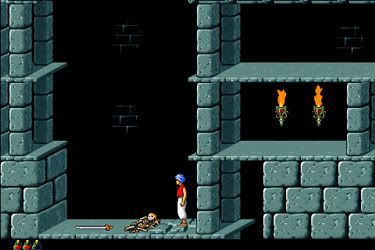
The very first video game I played was Prince of Persia; a remarkable 2D platformer by Jordan Mechner. I love that game but it comes from a different pedigree of game design in comparison to Mario. The plumber emphasises momentum and the exuberance of movement. The screen scrolls with Mario's leaps and bounds and encourages constant progression. Prince of Persia focuses more so on realistic animation; a standing jump propels the prince upwards and a running jump only reaches so far, regardless of how long you hold down the button. This changes the level design and general mentality of the player significantly. The pixel perfect jumps of the Prince lend themselves to precise environmental hazards unlike the wide open blocks of land featured in a typical Mario level. This design difference promotes a more methodical, cautious style of play; almost puzzle like. By treating the Prince's move set as the tools the player uses to solve the puzzles in the game, Mechner designed Prince of Persia as such to embrace it's more cerebral play style. A scrolling screen was replaced with a more traditional static image, allowing the player to stop and assess the various jumps, pits, enemies and general level design of each screen before deciding how they would best progress through it. It's a game that demands perfection and the challenge grew from executing the perfect run once you discovered the optimal way to complete each level. It was hard but it wasn't reflex intensive like Mario, Sonic and Eastern developed platformers in general. Even if the combat in Prince of Persia was the most reflex heavy part of the game, the detailed animation made it significantly easier to predict and counter the enemies attacks. Again, it was a game of observation over fast reflexes.
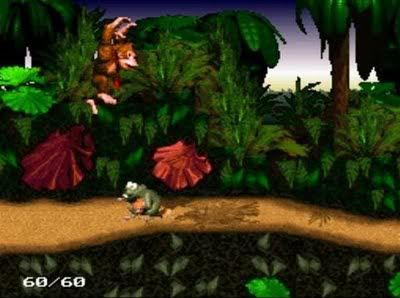
The Donkey Kong Country series is an example of infuriating platformer design (or at least the ones on the SNES were). It wasn't the controls, even if they were a little bit loose, and it wasn't even the strong focus on reflexes. No, the problem came about from the unusual raised camera perspective. In the effort to make their game look as 3D as possible, Rareware implemented a perspective that placed a horizon line on almost every surface, meaning that it was extremely difficult to determine exactly when to jump near the edge of a cliff. Suffice it to say, there were countless amounts I simply ran off the edge. Not content with one annoyance, Rareware also pushed the camera far to close to our simian friends, giving the player less than optimal time to prepare for the onslaught of shit that frequently ran towards you from the right side of the screen. Oh, Donkey and Diddy were also positioned alarmingly close to the middle of the screen which only further exacerbated the lack of preparation one had for the rampage of enemies. Mario, at the very least, always gave the player a considerable amount of time to recognize and react to the threat.
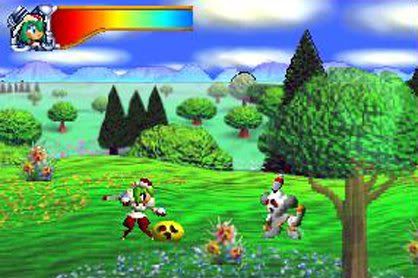
Or how about a game where there wasn't much of a threat at all in standard gameplay? Mischief Makers paired the diverse movement set of the Prince with the hurried, momentum based platforming of Mario to great effect. Here the player assumed the role of Marina, a green haired robot girl, as she sought to rescue her creator, Professor Theo. Being a robot, Marina is gifted with an array of interesting movement possibilities beyond the simple leap. She can dash across ground and sky with her boosters, slide across the dirt in a similar fashion to Mega Man and most enjoyable of all... pick up things and shake them! Rather than embrace the realistic movement of the Prince, Marina expands upon the momentum based platforming of Mario with a move set that emphasises speed. Once the player figures out Marina can leap after activating her slide boost to gain a significant burst in speed and sizable air time, environments become a playground for speed runs. There are little to no hazardous jumps in any of the levels and many of the stages act as short puzzle vignettes, encouraging the player to rush through the level with bold movements, exploiting every possible deviation of Marina's abilities. Mischief Makers thrives on the simple joy of controlling an extremely acrobatic character.
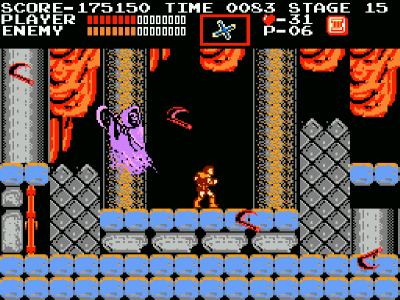
Castlevania, as a whole, is another interesting divergent of the platforming genre focusing on rhythm, momentum and timing. It's a combat heavy series that places huge importance on forward progression. Each enemy encounter has a specific attack routine that must be memorised and exploited to proceed. Many of the enemies you face take one or two hits to dispatch meaning that room and level design as a whole come together harmoniously in a very rhythmic, pattern based fashion that promotes flow; the player gets so absorbed in the activity that nothing else seems to matter. It's a much more designed experience than most games which is honestly surprising considering the breadth of gameplay elements included in the series.
Maybe I do like 2D platforming games after all. I prefer the ones with the more off-kilter gameplay design though. 2D platformers that only have a jump button are anathema to me. While I appreciate limiting the actions of the player controlled avatar can encourage intricate level design and more thoroughly exploit a single gameplay hook to it's fullest, I enjoy the chance to control a character with a full suite of abilities at their disposable. They feel more like a real person and less like a little blob of migs and megs.
Labels:
castlevania,
donkey kong country,
enix,
gaming,
jordan mechner,
konami,
mischief makers,
nintendo,
prince of persia,
rareware,
treasure,
video games
Subscribe to:
Comments (Atom)